ART and mQTLs
Can assisted reproductive technologies (ART) impact the association between DNA methylation and genotypes?
Julia Romanowska
2026-05-22
Photo by Zoltan Tasi on Unsplash
OUTLINE
Background
DNAm and mQTLs
DNAm reprogramming and ART
methods
some results
discussion
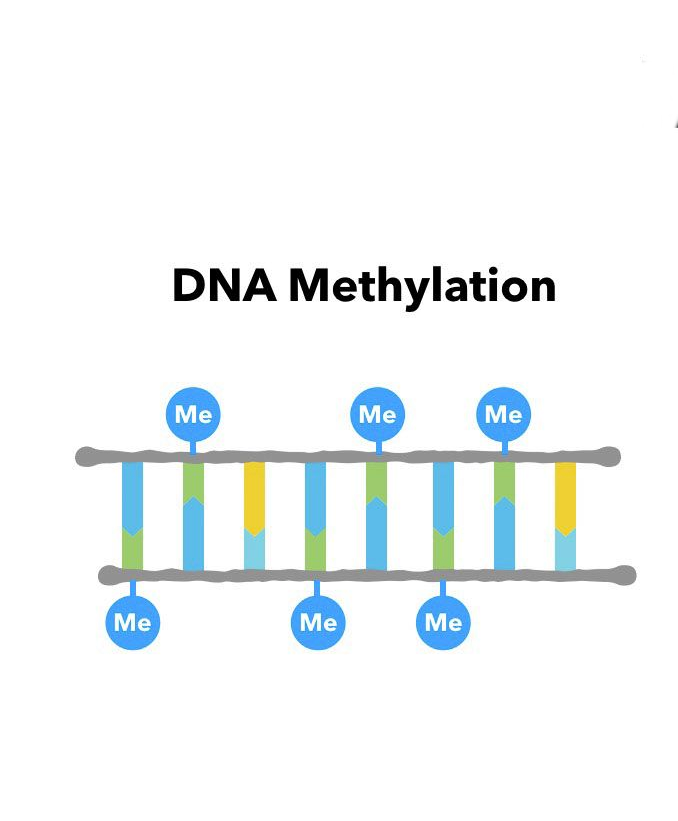
DNA methylation (DNAm)
CpG - most popular methylation site
non-uniformly distributed
‘marker’ for gene activation
DNAm reprogramming
wave of demethylation followed by rapid re-methylation
paternal DNA is demethylated faster than maternal
at blastocyst stage (days 5–9), DNAm level is lowest (ca.20% of all CpGs)
freezing of eggs could influence de-methylation and differentiation
[src: Albert and Greenberg, Development (2023); Greenberg, Front.Cell Develop.Biol. (2021)]
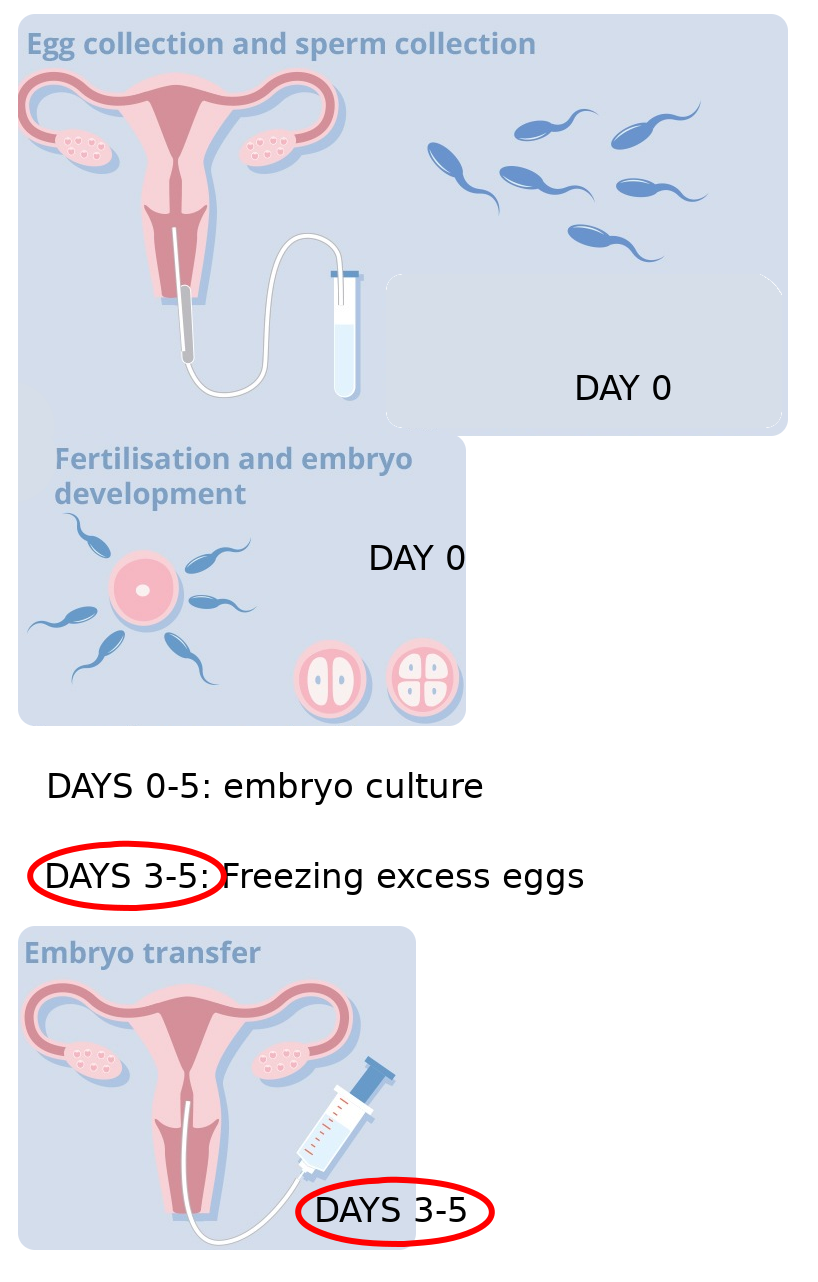
DNAm reprogramming & ART
ART = assisted reproductive technology
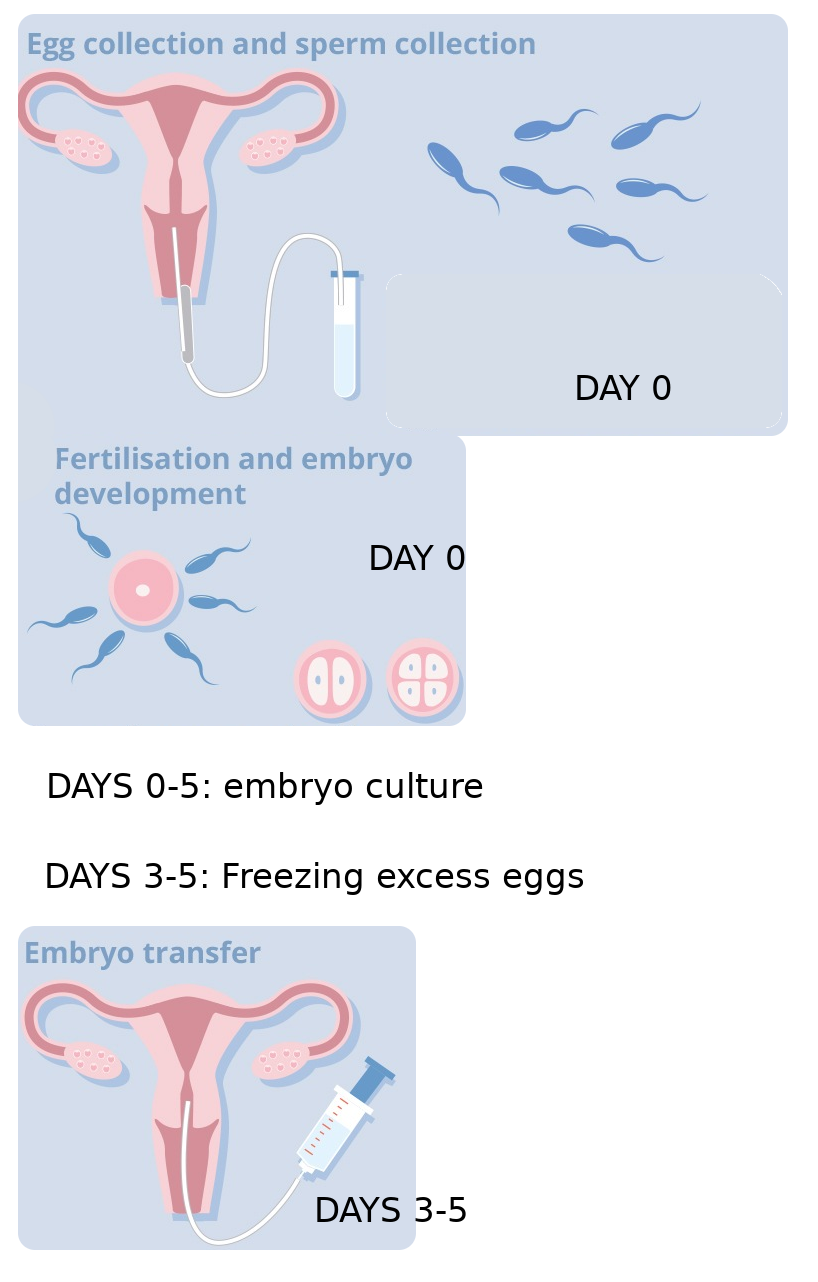
DNAm reprogramming & ART
ART = assisted reproductive technology
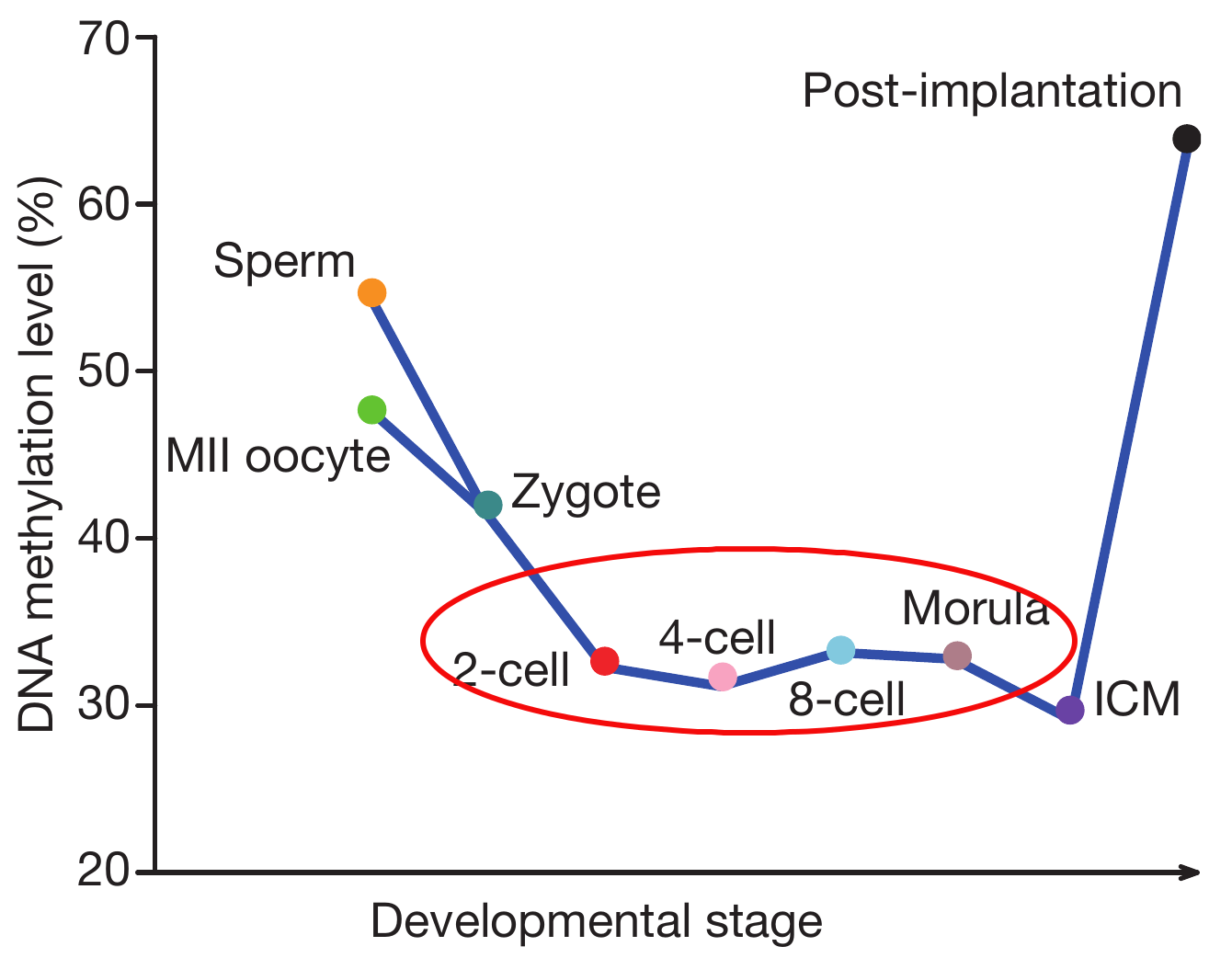
src: Guo, H., et al. (2014). Nature, 511(7511), 606–610.
mQTL
methylation quantitative locus
SNP–CpG pair:
association between
methylation status of that CpG and
allele at that SNP
- cis-mQTLs and trans-mQTLs
mQTL
methylation quantitative locus
SNP–CpG pair:
association between
methylation status of that CpG and
allele at that SNP
- cis-mQTLs
and trans-mQTLs
Aim of the study
do ART procedures influence re-methylation processes?
(using mQTLs as tool)
mQTL: Yes
ART-effect: Yes (after fertilization?)
mQTL: Yes
ART-effect: Yes
PoO ART-effect: Yes (maternal line?)
mQTL: Yes
ART-effect: Yes
PoO ART-effect: Yes (paternal line?)
methods
PLINK
R
JuliaLang
snakemake
methods
prepare SNP-CpG list:
- SNP–CpG distance of max.100 kbp
- SNP–CpG distance of min. 50 bp
- min.10 persons with DD of minor allele
- DNAm range > 0.1
agnostic search for mQTLs in parents
select the significant mQTLs (FDR < 0.1)
remove outliers
check for association in children
methods – models
- check for association in children
quantile regression[*]
using three models:
- DNAm \(\sim\) SNP \(+\) case_control_status
- DNAm \(\sim\) SNP \(\times\) case_control_status
- DNAm \(\sim\) SNP, stratified by case_control_status
model: additive

Volcano plot for additive model, using DNAm data from children.
model: interaction

Volcano plot for interaction model, using DNAm data from children.
model: stratified

‘ART’ group

‘non-ART’ group
“Interesting” findings
| CpG |
nrow |
| InlineStrings.String15 |
Int64 |
| cg17612569 |
41 |
| cg20741235 |
32 |
| cg21139150 |
17 |
| cg22706458 |
1 |
each SNP appear only in one mQTL
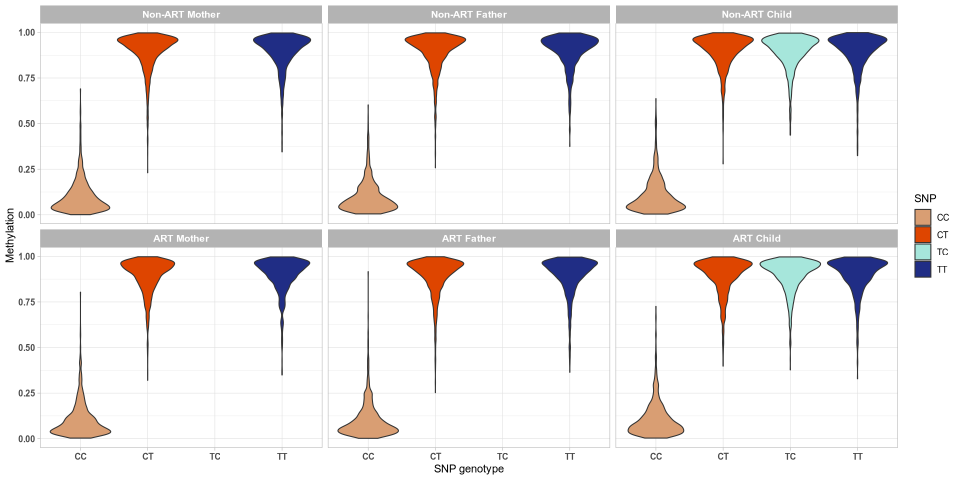
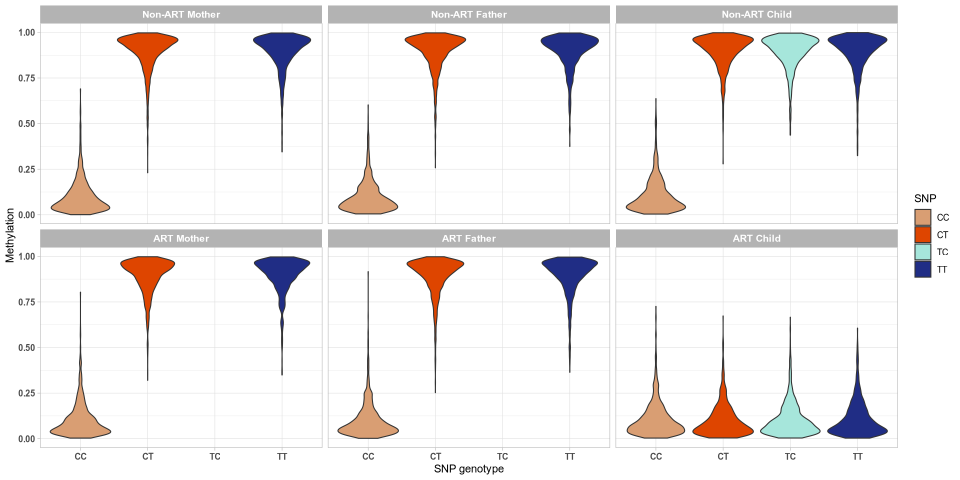
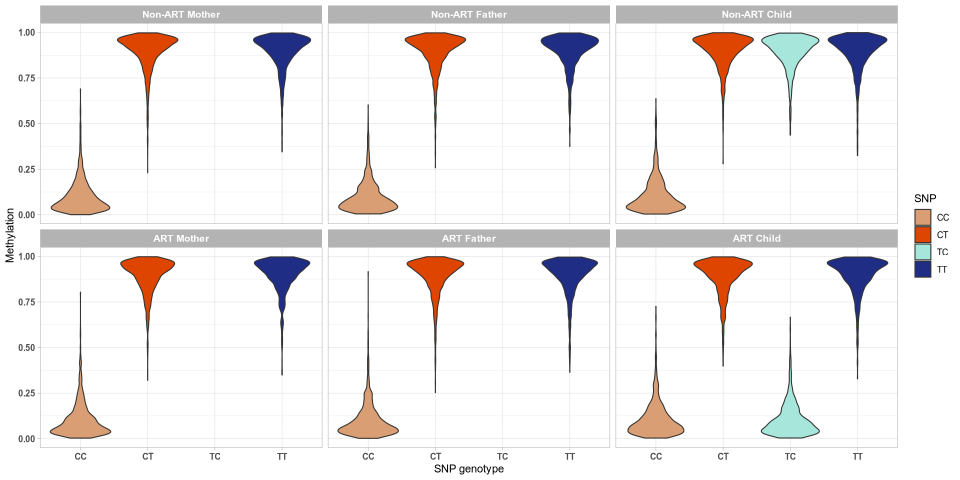
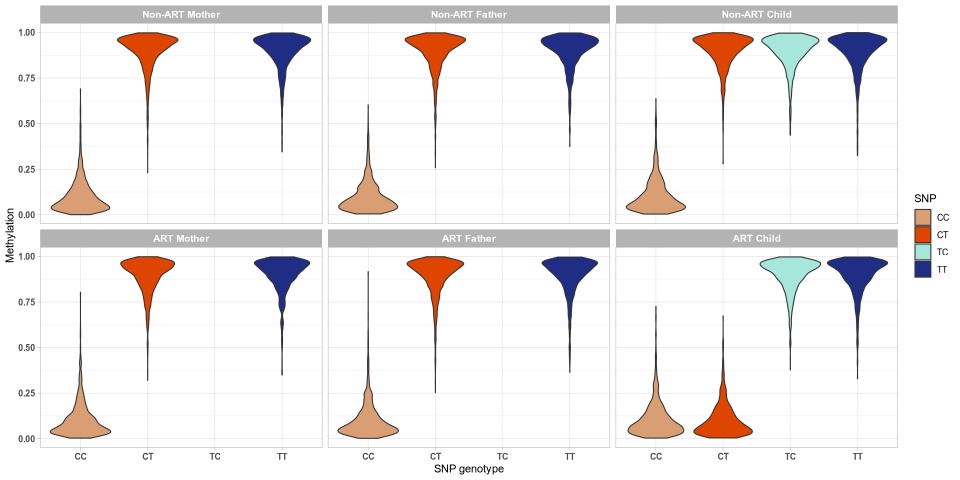
Example – genomic location
![]()
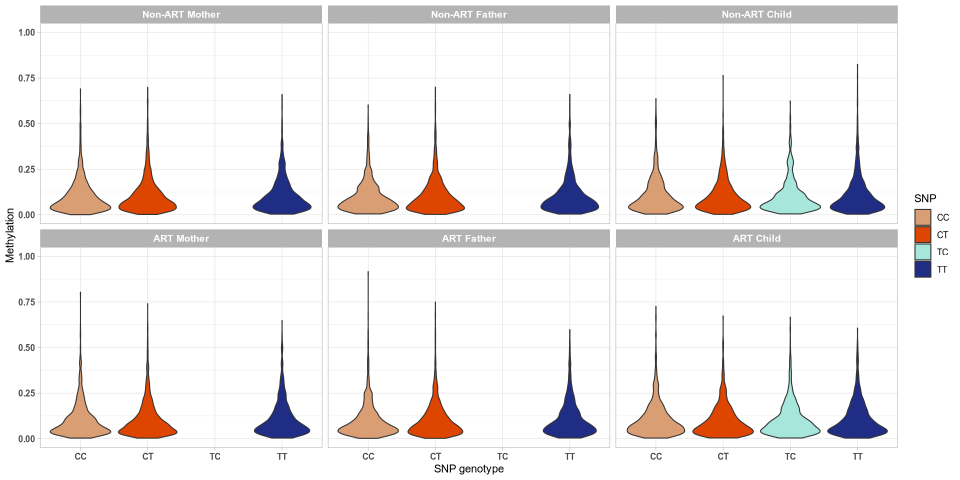
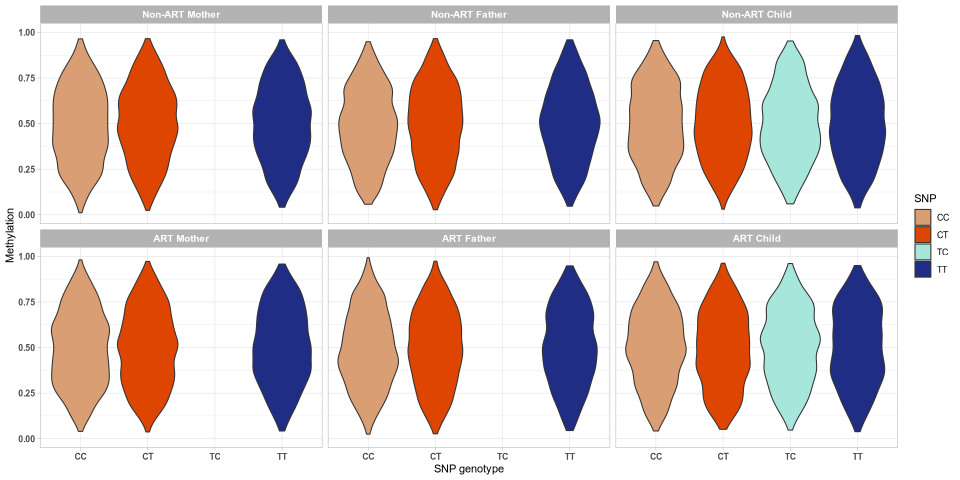
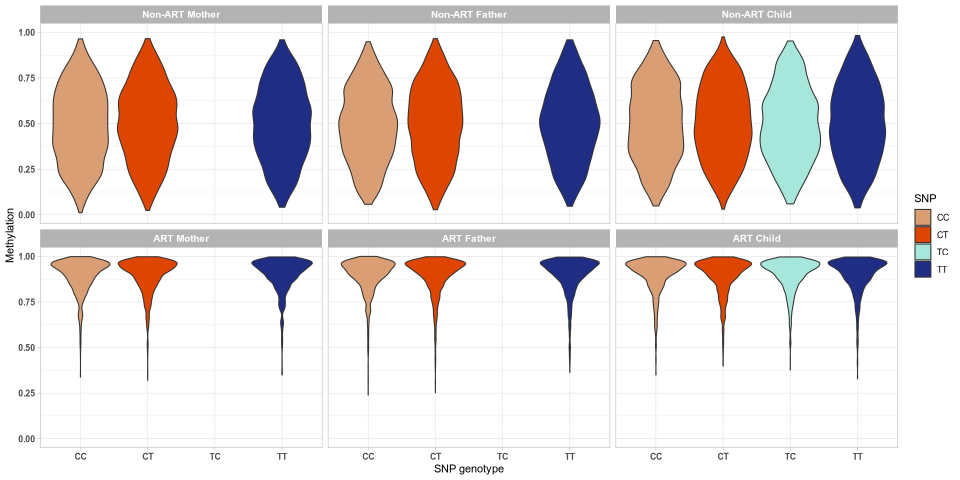
Example
![]()
Example
![]()